






Space-Age Aesthetics: Lucio Fontana, Yves Klein, and the Postwar European Avant-Garde
Stephen Petersen
Softcover | 20.32 x 2.26 x 24.13 cm | 320 pp
Pennsylvania State University Press | 2009 | 9780271033426
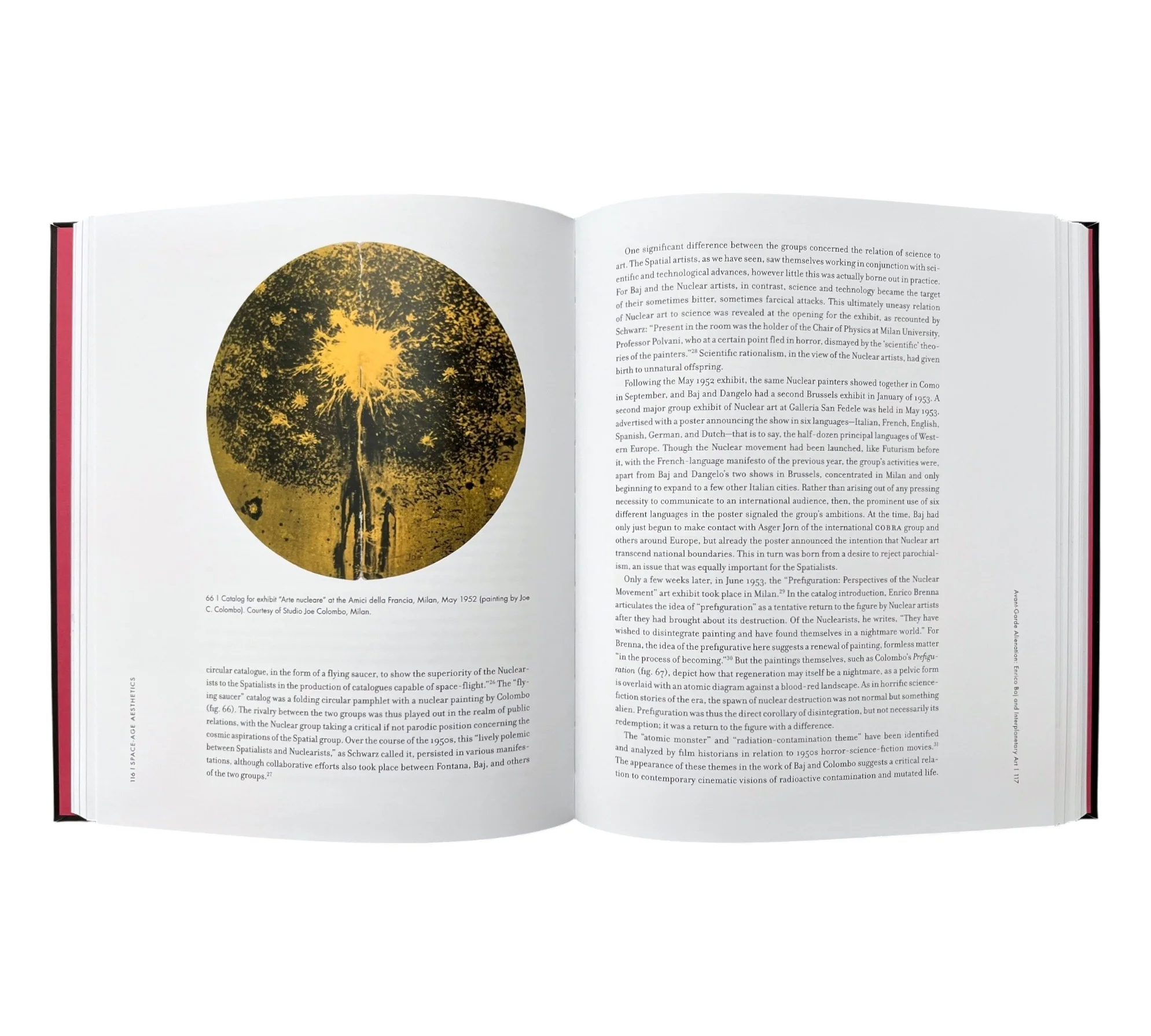
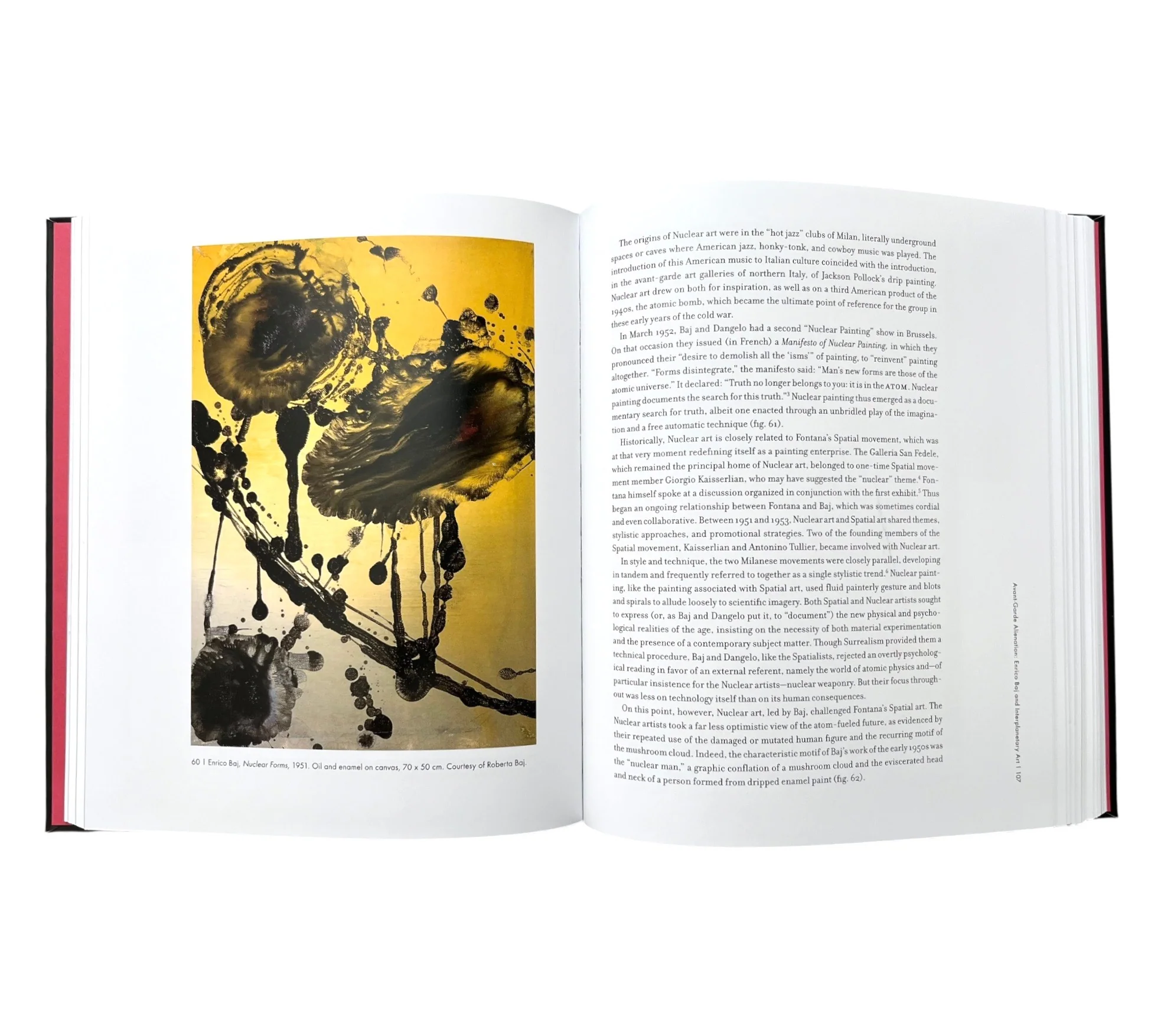
“In the Space Age,” wrote Italian artist Lucio Fontana, “spatial art.” Fontana’s desire to create art in space came in response to unprecedented technological advances and contemporary fantasies of space travel. Fifteen years before Andy Warhol said he wanted to be as much a part of his times as rockets and television, Fontana’s large-scale light-and-space installations became a short-lived but ultimately influential art-world phenomenon. The artists discussed in Space-Age Aesthetics looked beyond the limits of the picture, exploring space, mass media, pop culture, nuclear power, and science fiction to connect new art to the dramatic changes taking place through the encroaching Space Age.
Space-Age Aesthetics begins by addressing the imagery of space exploration as a field of mythical representation informed by Cold War politics and acted out in an expansive variety of media, from the picture press to comic books. Through persuasive arguments that reveal the many-layered interconnections between the artists’ aesthetics and theoretical responses to the dawn of an age of revolutionary technologies, this book offers new ways to think about the historical emergence of pop, conceptual, postmodern, and installation art and serves to fill the long-neglected gap in material on the post–World War II European avant-garde.
Product Information
Product Information
Shipping & Returns
Shipping & Returns
Description
Stephen Petersen
Softcover | 20.32 x 2.26 x 24.13 cm | 320 pp
Pennsylvania State University Press | 2009 | 9780271033426
“In the Space Age,” wrote Italian artist Lucio Fontana, “spatial art.” Fontana’s desire to create art in space came in response to unprecedented technological advances and contemporary fantasies of space travel. Fifteen years before Andy Warhol said he wanted to be as much a part of his times as rockets and television, Fontana’s large-scale light-and-space installations became a short-lived but ultimately influential art-world phenomenon. The artists discussed in Space-Age Aesthetics looked beyond the limits of the picture, exploring space, mass media, pop culture, nuclear power, and science fiction to connect new art to the dramatic changes taking place through the encroaching Space Age.
Space-Age Aesthetics begins by addressing the imagery of space exploration as a field of mythical representation informed by Cold War politics and acted out in an expansive variety of media, from the picture press to comic books. Through persuasive arguments that reveal the many-layered interconnections between the artists’ aesthetics and theoretical responses to the dawn of an age of revolutionary technologies, this book offers new ways to think about the historical emergence of pop, conceptual, postmodern, and installation art and serves to fill the long-neglected gap in material on the post–World War II European avant-garde.

