Donald Judd: Stacks (Rare edition)
Flavin Judd, Judd Tully, Jim Jacobs & Peder Bonnier
Hardcover | 26.3 x 1.2 x 34.5 cm | 68 pp
Mnuchin Gallery | 2013 | 9780989290913
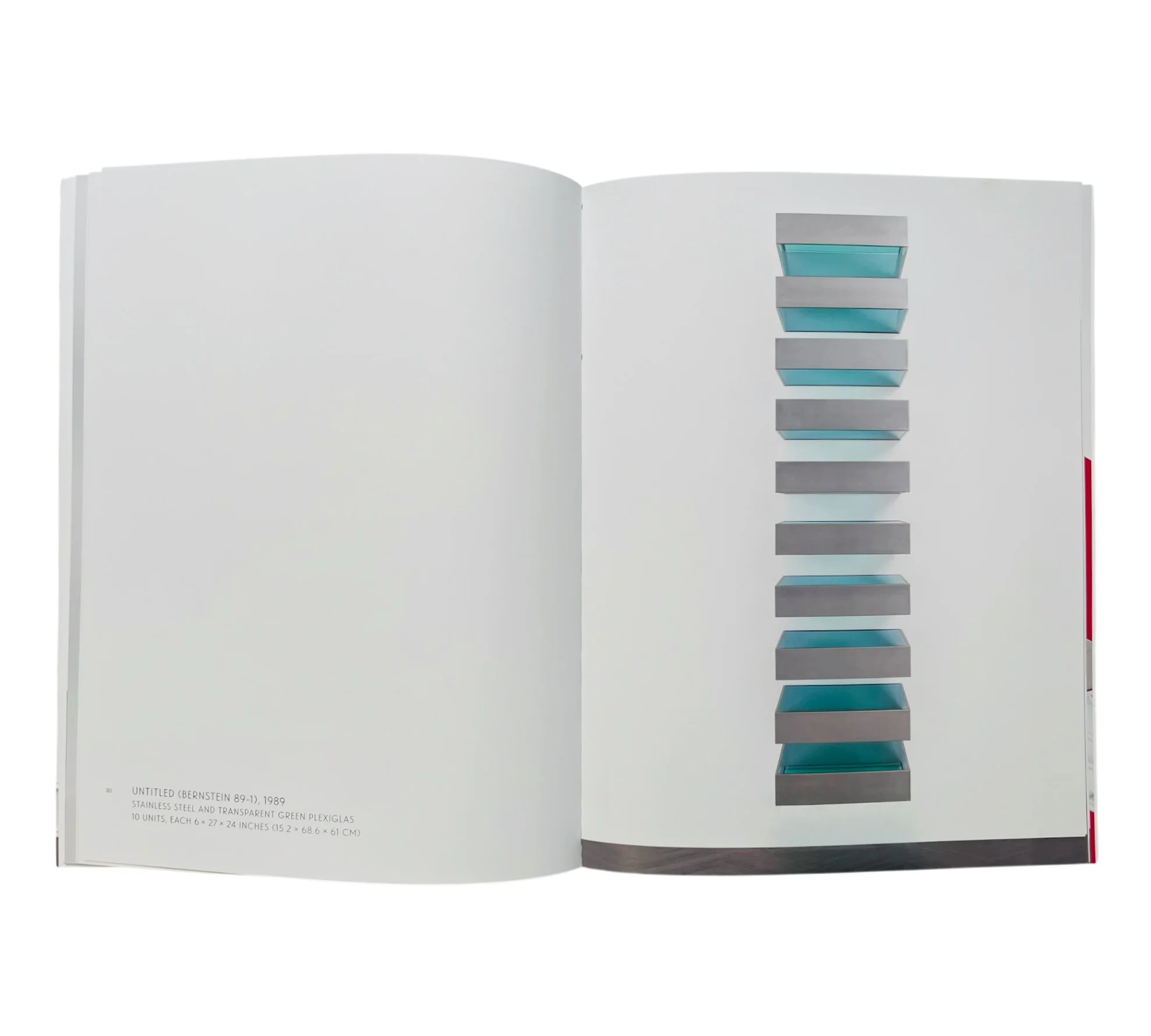
The 2013 exhibition Donald Judd: Stacks at Mnuchin Gallery focused on this single aspect of Donald Judd's work. Featuring ten stacks from four decades, this was the first exhibition devoted to this iconic form in Judd’s oeuvre and the history of modern sculpture.
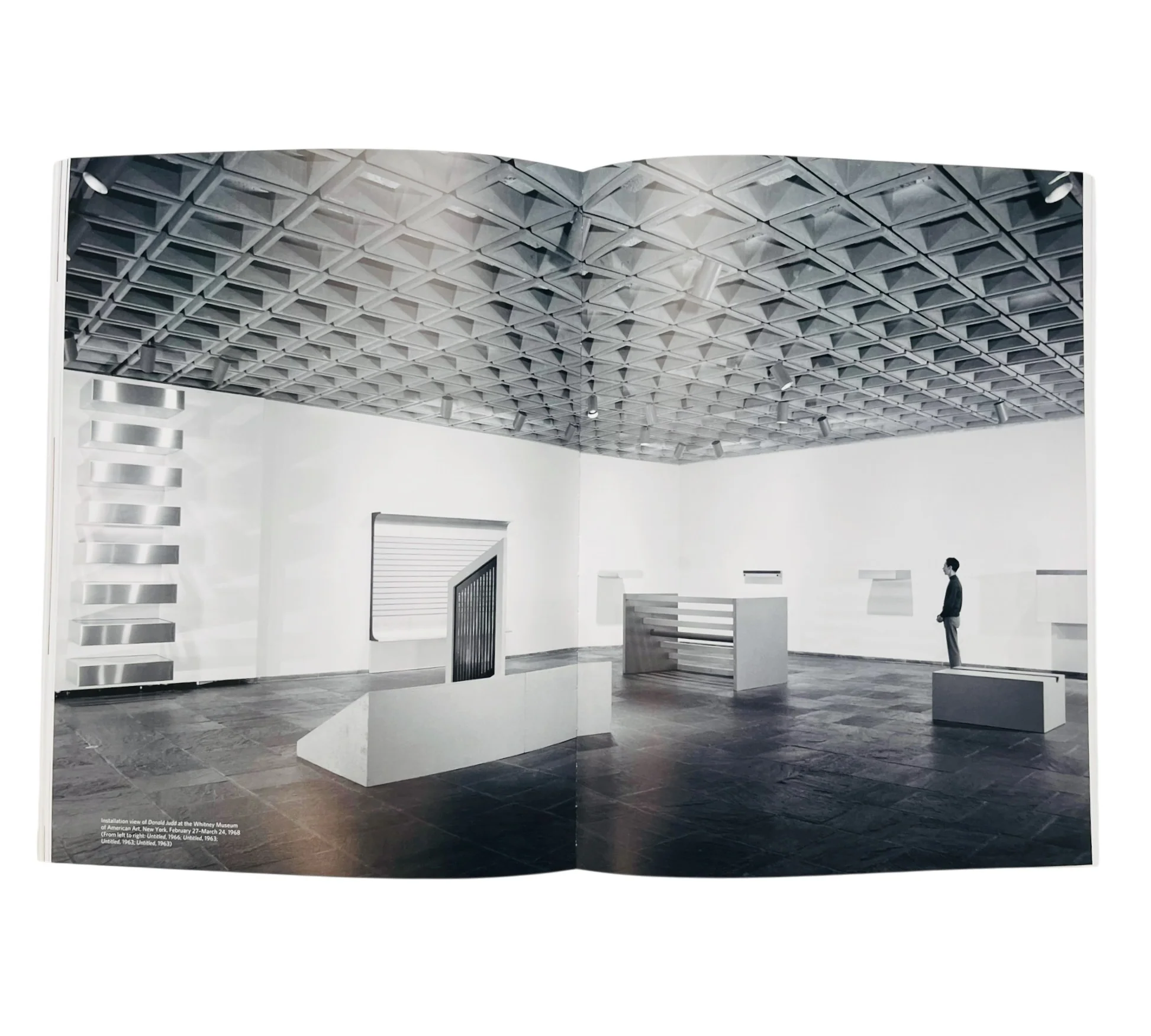
Judd is known for his geometric explorations of volume, space, and colour. In New York in the 1960s, Judd was among the first in a group of artists who challenged notions of subjectivity and pictorial illusionism by creating art from industrial processes and materials. When Judd created his first stack in 1965—an arrangement of identical iron units stretching from floor to ceiling—the work represented a breakthrough in his integration of art and architecture.
The work also fulfilled Judd’s goal of creating real space with sculpture: in this column of alternating solids and voids, the distances between the units became a part of the work, the spaces functioning themselves as open volumes. Here, the artist succeeded in giving ‘nothingness’ a spatial identity.
Judd went on to revisit the stack’s form through the last years of his career, and they now serve as his best-known legacy, represented in the collections of nearly every major museum worldwide. Over the years, Judd experimented with a broad spectrum of materials to explore the myriad effects of varying transparency, opacity, surface, and colour.
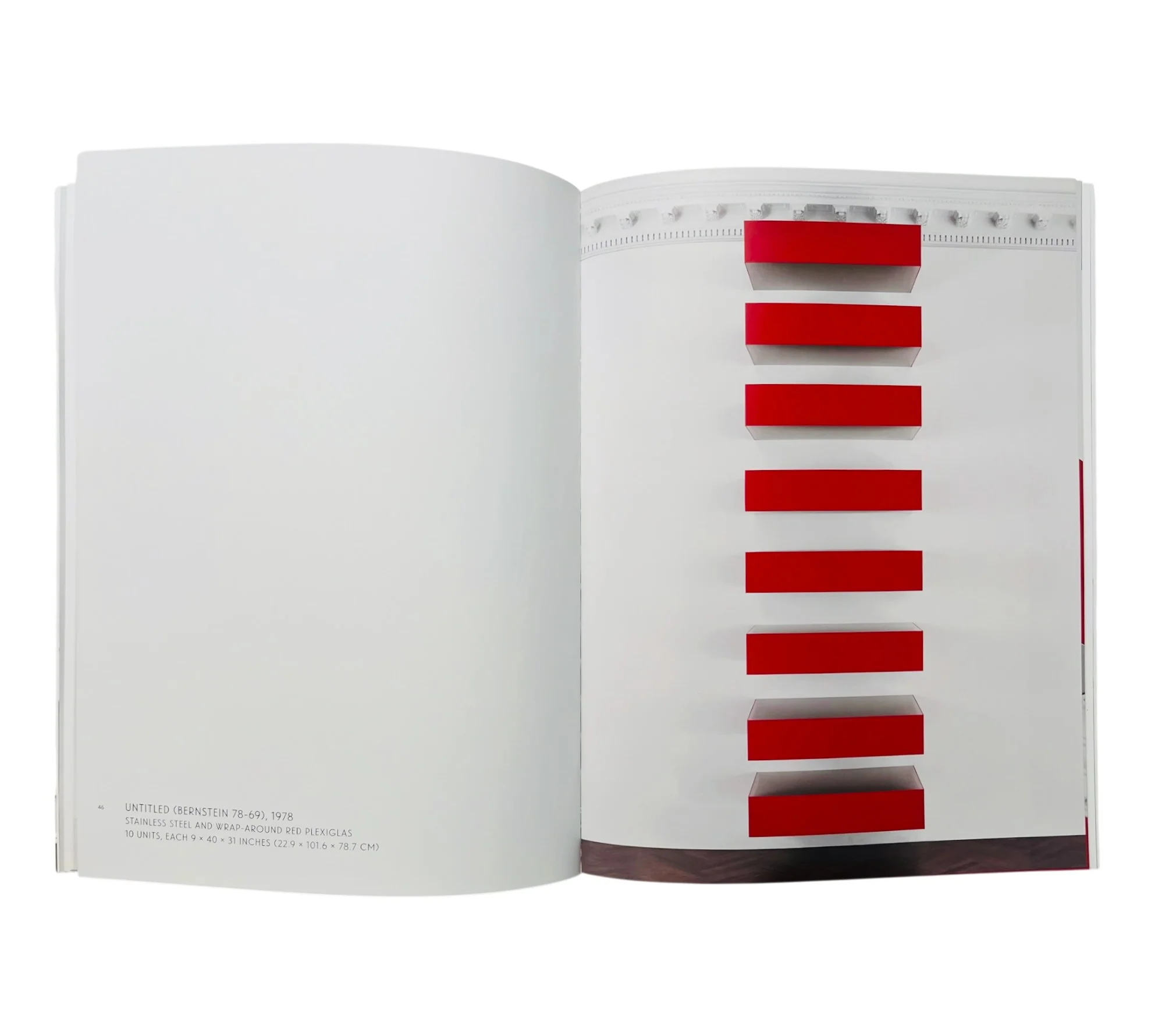
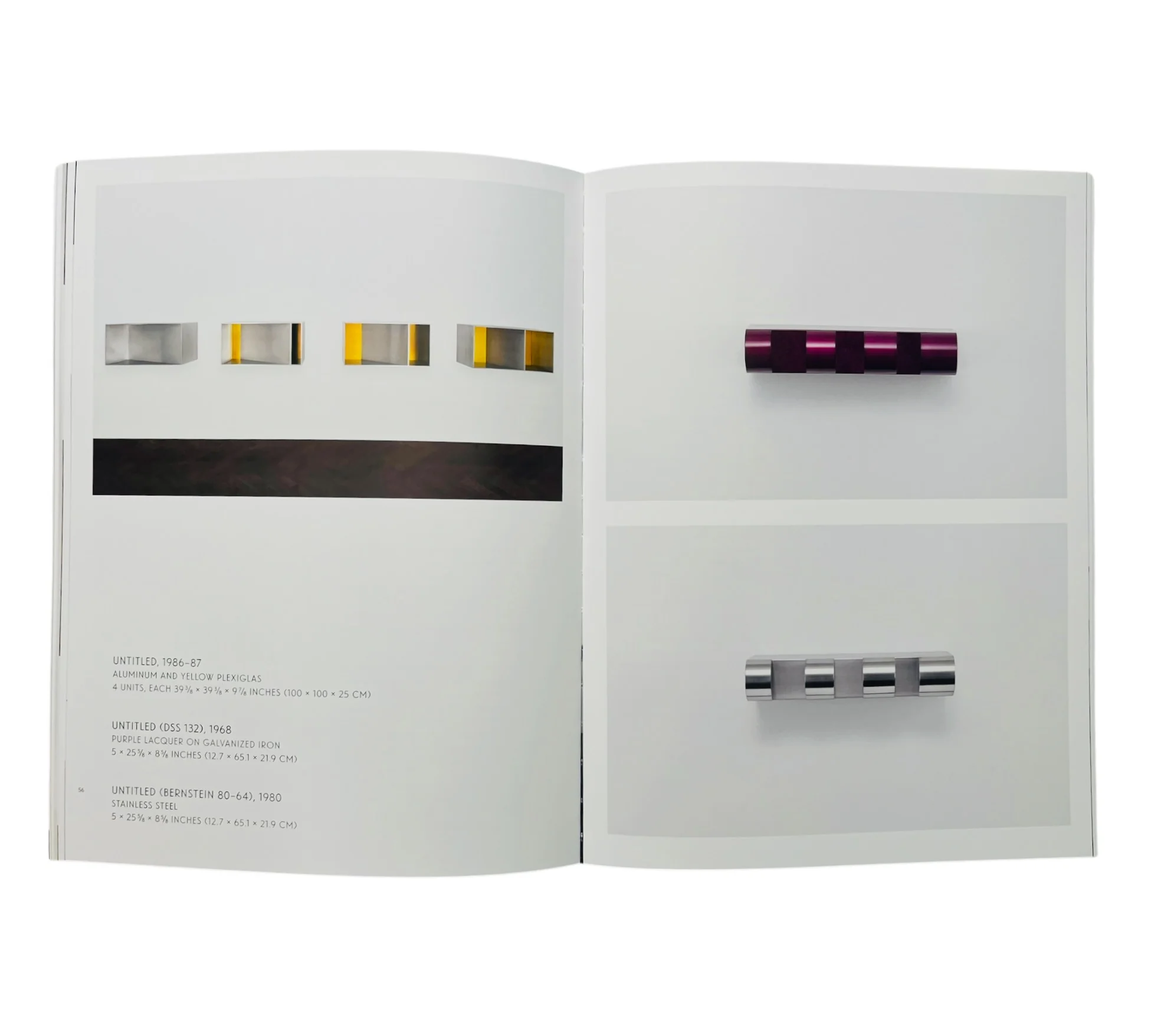
The exhibition included ten stacks of both large and small sizes, spanning from 1968 to 1990. The earliest stack in the exhibition, Untitled (DSS 120) (1968), represents one of Judd’s earliest uses of Plexiglas in this form, pairing the warm glow of amber Plexiglas with the cool sheen of stainless steel. From a decade later, Untitled (Bernstein 78-69) (1978) turns colour into voluptuous shape with its opaque candy red Plexiglas. The bold drama of colour culminates in Untitled (Bernstein 88-25) (1988), with its jewel-box like units of violet anodised aluminium.
The Stacks represent a revolutionary integration of art, architecture, and space - a bold embodiment of Judd's Minimalist principles that have truly influenced the course of modern sculpture. Celebrated since their creation in 1965, the stacks are now represented in many museum collections around the world.
Essays
Space Regained - Flavin Judd
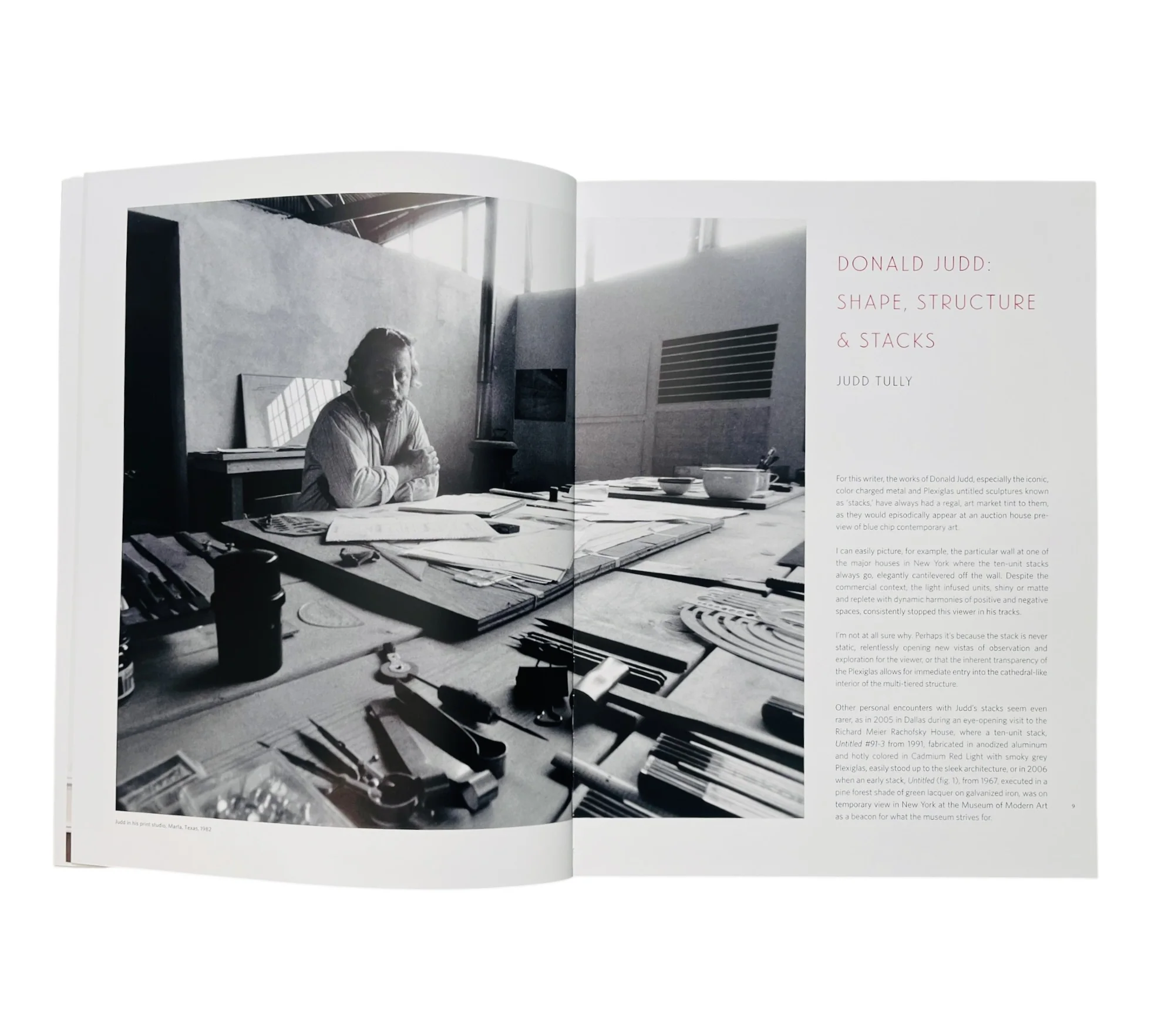
Donald Judd: Shape, Sculpture & Stacks - Judd Tully
My First Stack - Jim Jacobs
A Friend - Peder Bonnier
Product Information
Product Information
Shipping & Returns
Shipping & Returns
Description
Flavin Judd, Judd Tully, Jim Jacobs & Peder Bonnier
Hardcover | 26.3 x 1.2 x 34.5 cm | 68 pp
Mnuchin Gallery | 2013 | 9780989290913
The 2013 exhibition Donald Judd: Stacks at Mnuchin Gallery focused on this single aspect of Donald Judd's work. Featuring ten stacks from four decades, this was the first exhibition devoted to this iconic form in Judd’s oeuvre and the history of modern sculpture.
Judd is known for his geometric explorations of volume, space, and colour. In New York in the 1960s, Judd was among the first in a group of artists who challenged notions of subjectivity and pictorial illusionism by creating art from industrial processes and materials. When Judd created his first stack in 1965—an arrangement of identical iron units stretching from floor to ceiling—the work represented a breakthrough in his integration of art and architecture.
The work also fulfilled Judd’s goal of creating real space with sculpture: in this column of alternating solids and voids, the distances between the units became a part of the work, the spaces functioning themselves as open volumes. Here, the artist succeeded in giving ‘nothingness’ a spatial identity.
Judd went on to revisit the stack’s form through the last years of his career, and they now serve as his best-known legacy, represented in the collections of nearly every major museum worldwide. Over the years, Judd experimented with a broad spectrum of materials to explore the myriad effects of varying transparency, opacity, surface, and colour.
The exhibition included ten stacks of both large and small sizes, spanning from 1968 to 1990. The earliest stack in the exhibition, Untitled (DSS 120) (1968), represents one of Judd’s earliest uses of Plexiglas in this form, pairing the warm glow of amber Plexiglas with the cool sheen of stainless steel. From a decade later, Untitled (Bernstein 78-69) (1978) turns colour into voluptuous shape with its opaque candy red Plexiglas. The bold drama of colour culminates in Untitled (Bernstein 88-25) (1988), with its jewel-box like units of violet anodised aluminium.
The Stacks represent a revolutionary integration of art, architecture, and space - a bold embodiment of Judd's Minimalist principles that have truly influenced the course of modern sculpture. Celebrated since their creation in 1965, the stacks are now represented in many museum collections around the world.
Essays
Space Regained - Flavin Judd
Donald Judd: Shape, Sculpture & Stacks - Judd Tully
My First Stack - Jim Jacobs
A Friend - Peder Bonnier